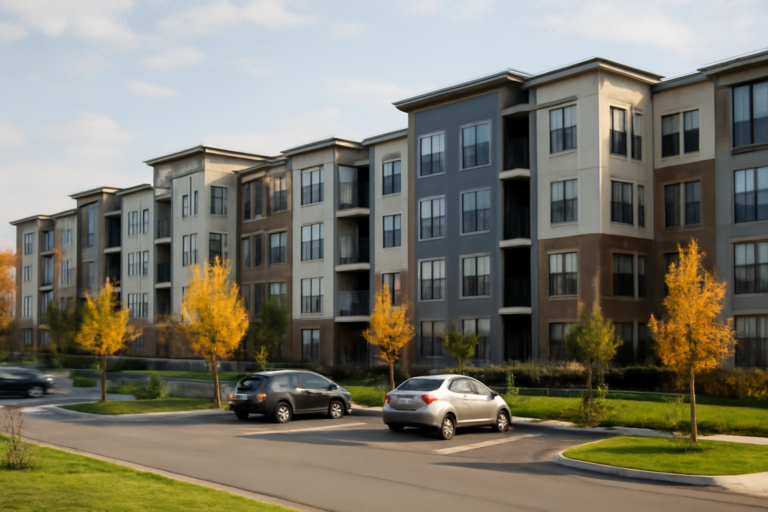

The CRE recovery is real—but uneven
Commercial real estate entered the second half of 2026 with a more constructive investment backdrop, but the latest data does not support a simple “the market is back” conclusion.
A new U.S. capital-markets report from the CREDA Research Foundation found that transaction volume, pricing, REIT acquisition activity, and distress measures all improved during the first half of the year. At the same time, net lending to commercial properties slowed sharply in the first quarter as securitized loan paydowns outpaced new originations, while life insurance company lending to non-multifamily assets stalled. (credaglobal.org)
For passive commercial real estate investors, that combination is more important than any single headline. Buyers may be returning, but the availability and cost of financing remain highly dependent on property type, asset quality, lender category, and loan maturity timing.
Investment activity is improving
The CREDA report points to a meaningful increase in investor confidence during the first half of 2026.
Transaction volume increased for office, industrial, and retail properties compared with the first half of 2025. Industrial recorded the strongest growth, at nearly 50%. Multifamily transaction volume, however, declined slightly year over year, reflecting the sector’s continued adjustment to elevated supply in many markets. (credaglobal.org)
REITs were also more active. The report said REIT purchases expanded by $6.8 billion, or 76.6%, during the first half of the year. REITs more than doubled their share of office, industrial, and multifamily transactions.
That does not mean institutional buyers are indiscriminately buying everything. It suggests that well-capitalized investors are becoming more willing to transact when pricing, operating fundamentals, and financing terms line up.
Distress also moved in the right direction. Distress among non-investment-grade commercial properties fell to 1.4%, the lowest level since June 2022. Lower distress can reduce forced-sale pressure, but it can also make it harder for buyers to find deeply discounted assets.
Debt capital is sending a different signal
The most important counterpoint is lending.
According to CREDA, net lending to multifamily properties rose 15.8% year over year in the first quarter of 2026. Net lending to other commercial properties, by contrast, fell to approximately $3.3 billion from $17.9 billion in the fourth quarter of 2025 as securitized loan repayments exceeded replacement lending. (credaglobal.org)
This is a crucial distinction for passive investors. A property can have improving occupancy and still face a difficult refinancing environment if its loan matures before lenders are willing to offer sufficient proceeds.
The lending picture was stronger in the second quarter than the first-quarter net-lending data might suggest. Mortgage Bankers Association data, reported by Multi-Housing News, showed commercial and multifamily mortgage originations were 16% higher in the second quarter of 2026 than a year earlier and 12% higher than in the first quarter. (multihousingnews.com)
However, that improvement was also uneven by property type and lender.
Year over year, loan volume increased 61% for retail, 47% for office, 19% for hotel, 8% for multifamily, and 6% for industrial properties. CMBS loan volume increased 68%, while depository lending rose 61%. By contrast, government-sponsored enterprise originations declined 17%, and life insurance company lending fell 27%. (multihousingnews.com)
The takeaway is not that financing has disappeared. It is that capital is rotating. CMBS and banks were more active, while some traditionally important sources of permanent capital were less aggressive.
Why this matters for passive investors
Passive investors should view the current market through the lens of cash-flow durability and capital-stack risk—not just purchase price.
A property with stable occupancy, conservative leverage, and a manageable maturity schedule may benefit from improving transaction liquidity. A highly leveraged property with a near-term maturity may remain vulnerable even if market-level distress is falling.
Three implications stand out.
1. Refinancing risk remains asset-specific
Broad lending growth does not guarantee that every property will refinance smoothly. Lenders continue to differentiate among markets, sponsors, property conditions, tenant quality, lease rollover, and debt-service coverage.
For investors reviewing a passive deal, the key questions include:
- When does the loan mature?
- Is the loan fixed-rate, floating-rate, or hedged?
- What happens if the property value is flat at refinancing?
- Does the business plan assume a lower interest rate or higher exit valuation?
- Is there enough operating cash flow to support a period of elevated debt service?
A strong sponsor can help, but it cannot eliminate the need for realistic downside underwriting.
2. Sector labels are becoming less useful
Office, industrial, retail, and multifamily each contain very different risk profiles.
Office lending growth may reflect renewed activity in selected buildings rather than a broad recovery across the entire sector. Retail lending growth may favor grocery-anchored and necessity-oriented properties over discretionary centers. Industrial activity may be supported by long-term logistics demand, but new supply and tenant concentration still matter.
Multifamily remains one of the more financeable property types, yet the CREDA report noted that its construction pipeline fell to the lowest level in a decade. At the same time, industrial construction continued to rebound, reaching its highest share of inventory since the end of 2024. (credaglobal.org)
That divergence may eventually support multifamily fundamentals by limiting future supply, while creating a need for greater selectivity in industrial submarkets where new deliveries are concentrated.
3. Better liquidity may bring fewer obvious bargains
As REITs and other institutional buyers return, competition for high-quality assets can increase. That may help stabilize valuations, but it also means passive investors should be cautious about assuming that every transaction offers a distressed-market entry point.
The strongest opportunities may be properties with temporary operational issues, near-term capital needs, or complicated financing situations—not necessarily assets with permanently impaired demand.
What investors should watch next
The second half of 2026 will be shaped by the interaction between interest rates and lender behavior. CREDA noted that rates rose after the second quarter, including a 25-basis-point Federal Reserve increase in September, and expects higher rates to weigh on transactions and lending during the back half of the year. (credaglobal.org)
Passive investors should monitor:
- Loan maturities and extension activity across the portfolio
- CMBS delinquency and special-servicing trends
- Bank appetite for commercial real estate loans
- Spreads and proceeds on refinancings, not just headline interest rates
- New industrial deliveries and apartment absorption
- REIT acquisition activity by sector and market
- Whether transaction volume is being driven by operating fundamentals or financing pressure
The most useful signal may be the spread between transaction activity and lending activity. If sales continue improving while debt proceeds remain constrained, buyers with available equity may gain negotiating leverage—but owners facing maturities could remain under pressure.
The bottom line
Commercial real estate is moving toward recovery, but the recovery is selective and capital-dependent.
Improving transaction volume, lower distress, and increased REIT activity are encouraging. Yet the sharp contrast between multifamily lending growth and the near-stall in net lending to other commercial properties shows why passive investors should not rely on broad market optimism.
The better approach is to evaluate each investment through three filters: durable property-level cash flow, realistic refinancing assumptions, and a sponsor capable of navigating a market where capital is available—but not equally available to everyone.