A large industrial financing closes as lenders remain selective
Commercial real estate lending is not broadly back to normal, but one recent transaction shows where capital is flowing with conviction.
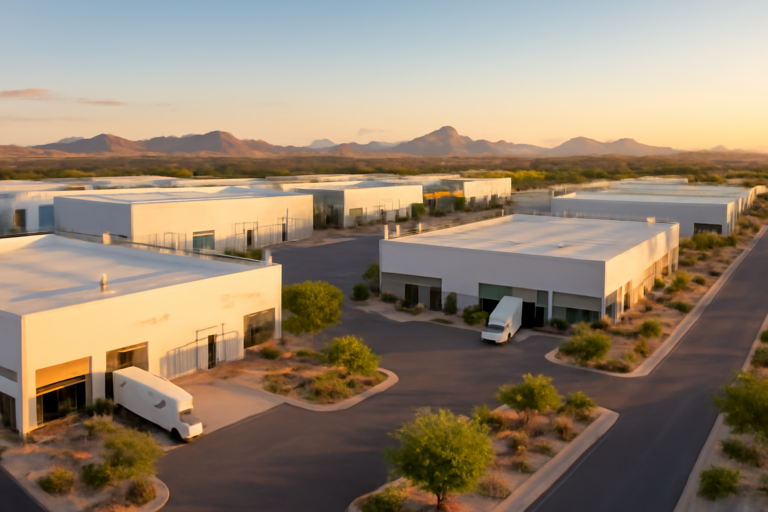
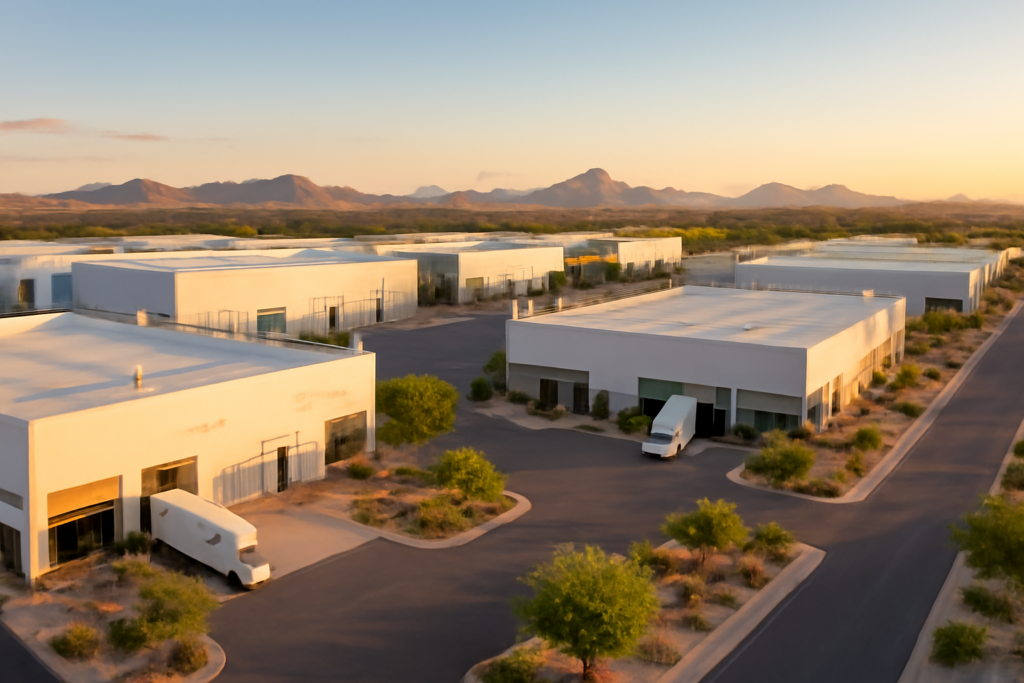
JLL Capital Markets arranged $718.2 million of financing for Project Pegasus, a 52-property shallow-bay industrial portfolio totaling 5.2 million square feet across the Phoenix metropolitan area. The financing includes a $527.1 million single-asset, single-borrower securitization led by Morgan Stanley, plus a $191.1 million balance-sheet component from Bank of America.
The portfolio, owned by affiliates of Equus Capital Partners, was approximately 92% leased at closing and included roughly 1,260 suites. The properties serve a broad range of tenants in manufacturing, logistics, distribution, construction, machinery, professional services, consumer products, and technology.
That combination—functional buildings, infill locations, and a diversified tenant base—is the more important story than the headline loan amount.
Why shallow-bay industrial matters
Much of the industrial investment narrative over the past several years has focused on large logistics facilities serving major distribution networks. Those properties remain important, but shallow-bay industrial serves a different part of the economy.
These buildings are generally smaller and more flexible. They can accommodate local distributors, contractors, light manufacturers, service businesses, and other small and midsize companies that need warehouse, showroom, assembly, or service space close to customers.
Project Pegasus includes buildings ranging from approximately 29,000 square feet to nearly 259,000 square feet, with an average building size of about 100,000 square feet. The assets average roughly 20 feet of clear height and offer flexible suites and loading capabilities.
For investors, this type of property can have a different risk profile from a single-tenant mega-warehouse. A large tenant move-out can materially affect a big-box facility. A shallow-bay portfolio may have more leasing activity and operating complexity, but its revenue is spread across many occupants and business categories.
That diversification is especially valuable in a market where industrial demand is normalizing rather than accelerating indiscriminately.
The broader industrial market is moving from expansion to selection
The National Association of Realtors’ October 2026 commercial real estate report described industrial conditions as more balanced than they were during the pandemic-era boom. Demand improved from the prior year, helping narrow the gap with new supply, but rent growth remained restrained. Logistics led leasing activity, while specialized facilities maintained the tightest vacancy. Flex space continued to lag, with negative absorption and the highest vacancy among the major industrial formats.
That backdrop matters. Investors can no longer assume that every industrial asset will benefit equally from the same broad trends.
The market is separating into several categories:
- Well-located, functional industrial properties with durable tenant demand
- Newer logistics facilities competing for large users
- Older or less flexible buildings exposed to tenant downsizing
- Flex properties in markets where office-related demand remains weak
- Secondary assets that may require meaningful capital to remain competitive
Project Pegasus appears positioned in the first category. Its properties are distributed across established Phoenix submarkets, including the West Valley, Airport, Deer Valley, Chandler, Mesa, and Tempe areas. The portfolio also benefits from proximity to major transportation infrastructure and a wide tenant base.
That does not eliminate risk. It does make the collateral easier for lenders to understand and underwrite.
What the financing says about the debt market
The structure of the transaction is notable because it combines securitized debt with balance-sheet financing.
The securitized portion suggests that larger lenders and capital-markets investors remain willing to fund industrial collateral when the property fundamentals are sufficiently strong. The Bank of America component indicates that a major bank was also comfortable retaining exposure to the portfolio.
This is not the same as saying debt is broadly abundant. Floating-rate financing introduces interest-rate risk, and a five-year term creates a future refinancing decision. The loan also depends on continued portfolio-level performance rather than the strength of one individual building.
Still, the deal provides evidence that high-quality industrial borrowers can access substantial capital even while lenders remain cautious elsewhere in commercial real estate.
For passive investors, the key takeaway is that “capital availability” is increasingly asset-specific. A sponsor with a well-leased, diversified industrial portfolio may have financing options that are unavailable to an owner of older, concentrated, or poorly located properties.
The Phoenix connection: growth helps, but does not solve everything
Phoenix remains one of the country’s major growth and logistics markets, supported by population growth, manufacturing investment, distribution activity, and expanding business infrastructure. Infill locations are particularly valuable because they place tenants closer to customers and labor pools while reducing delivery distances.
But growth markets can also overbuild. Industrial supply expanded rapidly across many Sun Belt markets, and vacancy increased as deliveries outpaced near-term absorption. That makes the distinction between “Phoenix industrial” and “well-located Phoenix industrial” critical.
Assets in established submarkets may have an advantage over peripheral developments because they can serve existing customers more efficiently. They may also face less direct competition from newly delivered buildings that target large users or demand higher rents for modern specifications.
Investors should therefore examine submarket-level supply, not just metro-level forecasts.
What passive investors should watch
1. Tenant rollover and suite-level demand
A diversified tenant roster is helpful, but many small tenants also mean frequent lease expirations, renewal negotiations, and tenant-improvement costs. Investors should review the rollover schedule, average lease term, renewal history, and leasing costs—not just current occupancy.
2. The quality of the building stock
Older industrial properties can perform well when they offer functional layouts, adequate loading, good access, and strong locations. Age alone is not the issue. Obsolescence is.
Clear height, parking, truck access, power capacity, loading configuration, and suite divisibility can all affect future competitiveness.
3. Floating-rate exposure
The Project Pegasus financing includes a floating-rate component. That can reduce initial debt costs or improve flexibility, but it also increases sensitivity to benchmark rates and hedging costs.
Passive investors should understand whether the sponsor has interest-rate caps, swaps, reserves, or other protections in place—and how those protections affect cash flow after expiration.
4. Refinance risk at maturity
A five-year loan may look comfortably long from an acquisition perspective, but it can arrive quickly in a cyclical market. The relevant question is not only whether the asset performs today. It is whether projected net operating income, loan balance, and market liquidity are likely to support a refinance when the term ends.
5. Capital expenditures and tenant improvements
Shallow-bay properties can require recurring investment to maintain competitiveness. Roofs, paving, loading areas, HVAC, electrical systems, signage, and common areas can all affect returns. A passive investment model should provide realistic reserves rather than treating current cash flow as fully distributable.
The larger lesson
The most useful conclusion from Project Pegasus is not that industrial real estate has become risk-free. It is that lenders are rewarding specific forms of industrial resilience.
Functional infill properties with diversified tenants, multiple leasing options, and access to established demand nodes can still attract substantial debt capital. At the same time, weaker industrial assets may face slower leasing, limited rent growth, and more restrictive refinancing terms.
For passive investors evaluating industrial opportunities, the sector label is only the starting point. The real underwriting questions are more specific:
- Is the property in an infill location or a speculative growth corridor?
- Can the building serve multiple tenant types?
- How much revenue is exposed to near-term rollover?
- Are rents supported by current market evidence?
- Does the financing remain workable if rates stay higher for longer?
- Is the sponsor budgeting enough for leasing and capital needs?
The current market is rewarding answers to those questions—not simply exposure to industrial square footage.